Digital marketing is changing rapidly, and artificial intelligence (AI) is becoming an important part of that change. From creating content and analyzing customer behavior to improving advertising campaigns and automating repetitive tasks, AI is helping marketers work more efficiently and make better data-driven decisions.
AI digital marketing refers to the use of artificial intelligence technologies, tools, and systems to plan, execute, analyze, and improve digital marketing activities. Businesses of all sizes can use AI to understand their audiences, create personalized experiences, improve their online presence, and save time.
However, AI is not a replacement for human marketers. The most effective approach is to combine AI tools with human creativity, strategy, experience, and judgment.
In this guide, we will explore what AI digital marketing means, how businesses can use AI, the role of ChatGPT, AI advertising, practical examples, benefits, limitations, and the future of AI in modern digital marketing.
What Is AI Digital Marketing?
AI digital marketing is the use of artificial intelligence to support different digital marketing activities. AI systems can analyze large amounts of information, identify patterns, generate ideas, automate certain processes, and provide insights that can help marketers make informed decisions.
Traditional digital marketing often involves a significant amount of manual research and repetitive work. A marketer may manually analyze keywords, prepare content ideas, segment audiences, monitor campaigns, and review performance reports.
With AI-based digital marketing, many of these activities can be supported by intelligent tools.
For example, an AI tool can help a marketer identify content topics, analyze search intent, create a first draft, summarize campaign data, or suggest audience segments. The marketer can then review the output, add expertise, fact-check information, and make the final decision.
This makes AI a useful assistant throughout the marketing process.
How Does AI Work in Digital Marketing?
AI can process information and identify patterns much faster than humans can manually analyze large datasets. In digital marketing, these capabilities can be used to understand customers and improve marketing activities.
A simple AI marketing workflow can look like this:
Data → AI Analysis → Insights → Marketing Action → Measurement → Optimization
For example, an online business may collect information about which products customers view, which pages they visit, and which marketing campaigns generate conversions.
AI can help identify patterns in that information. Based on those insights, marketers can create more relevant campaigns or improve the customer experience.
AI can also support marketing teams with content research, customer segmentation, campaign analysis, automation, and personalization.
The important point is that AI works best when it is given a clear objective and reliable information. Human marketers still need to evaluate the results and decide how they should be used.
The Role of AI in Digital Marketing
The role of AI in digital marketing is expanding across almost every stage of the customer journey. AI can support research, content creation, advertising, customer communication, analytics, and optimization.
AI for Content Creation
Content is an important part of digital marketing. Marketers need blog posts, social media captions, email campaigns, advertisements, product descriptions, and website copy.
AI tools can help with brainstorming topics, creating outlines, generating first drafts, rewriting text, and developing content variations.
For example, a digital marketer writing about SEO can use AI to generate possible article topics and organize them into a content calendar.
However, AI-generated content should not simply be published without review. Marketers should add original insights, practical examples, accurate information, brand personality, and human experience.
The goal should be to use AI to make the content creation process more efficient while maintaining quality.
AI for SEO
Search engine optimization requires research, planning, content optimization, and continuous analysis. AI tools can assist with several of these activities.
AI can help marketers:
- Generate keyword ideas
- Group keywords by topic
- Understand search intent
- Create content outlines
- Identify content gaps
- Analyze competitors
- Suggest internal linking opportunities
- Improve content readability
For example, instead of manually organizing hundreds of keyword ideas, a marketer can use AI to group related terms into useful topic clusters.
Still, AI recommendations should be checked against actual search results, audience needs, and reliable SEO practices.
AI for Customer Personalization
Customers increasingly expect relevant and personalized experiences. AI can help businesses understand customer behavior and provide more relevant messages or recommendations.
For example, an e-commerce website may use customer behavior to recommend products that are relevant to a visitor’s interests.
Similarly, an email marketing campaign can use customer information to send different messages to different audience segments.
Personalization can help businesses create more relevant communication instead of sending exactly the same message to every customer.
AI for Marketing Automation
Marketing includes many repetitive activities, such as sending follow-up emails, organizing leads, analyzing reports, and scheduling content.
AI and automation tools can help reduce manual work.
For example, when a customer submits a form on a website, an automated workflow can send a confirmation email and add the lead to a suitable follow-up sequence.
This allows marketers to spend more time on strategy, creativity, customer relationships, and campaign planning.
How to Use AI in Digital Marketing
Using AI in digital marketing does not mean handing your entire marketing strategy to an AI tool. Instead, businesses should identify specific tasks where AI can provide useful support.
Here are several practical ways to use AI.
1. Use AI for Keyword Research
AI can help generate keyword ideas related to your business, products, or services. It can also organize keywords according to topics and search intent.
For example, a digital marketing business can ask an AI tool to suggest keyword categories around SEO, social media marketing, content marketing, and paid advertising.
The suggestions should then be validated using appropriate keyword research and search tools.
2. Use AI for Content Ideas
Coming up with new content ideas consistently can be difficult.
AI can help generate blog topics, social media ideas, video topics, FAQs, and content calendar suggestions.
A marketer can provide the target audience, business niche, and marketing goal to get more relevant ideas.
3. Use AI for Social Media Marketing
AI can assist with social media content planning. It can help create caption ideas, content themes, hooks, and variations for different platforms.
For example, one blog post can be converted into several social media posts, a short video script, and an email topic.
Human editing is still important because social media content should sound natural and match the brand’s personality.
4. Use AI for Email Marketing
AI can help marketers develop email subject lines, campaign ideas, drafts, and personalized messaging.
It can also help organize different types of emails, such as welcome emails, promotional emails, educational emails, and follow-up messages.
The final email should always be reviewed before sending, especially when it contains customer information or important business claims.
5. Use AI for Data Analysis
Digital marketing generates a large amount of data. AI can help marketers identify patterns and summarize information.
For example, AI can assist in analyzing campaign performance and identifying which channels, audiences, or content types appear to be performing well.
These insights can then support better marketing decisions.
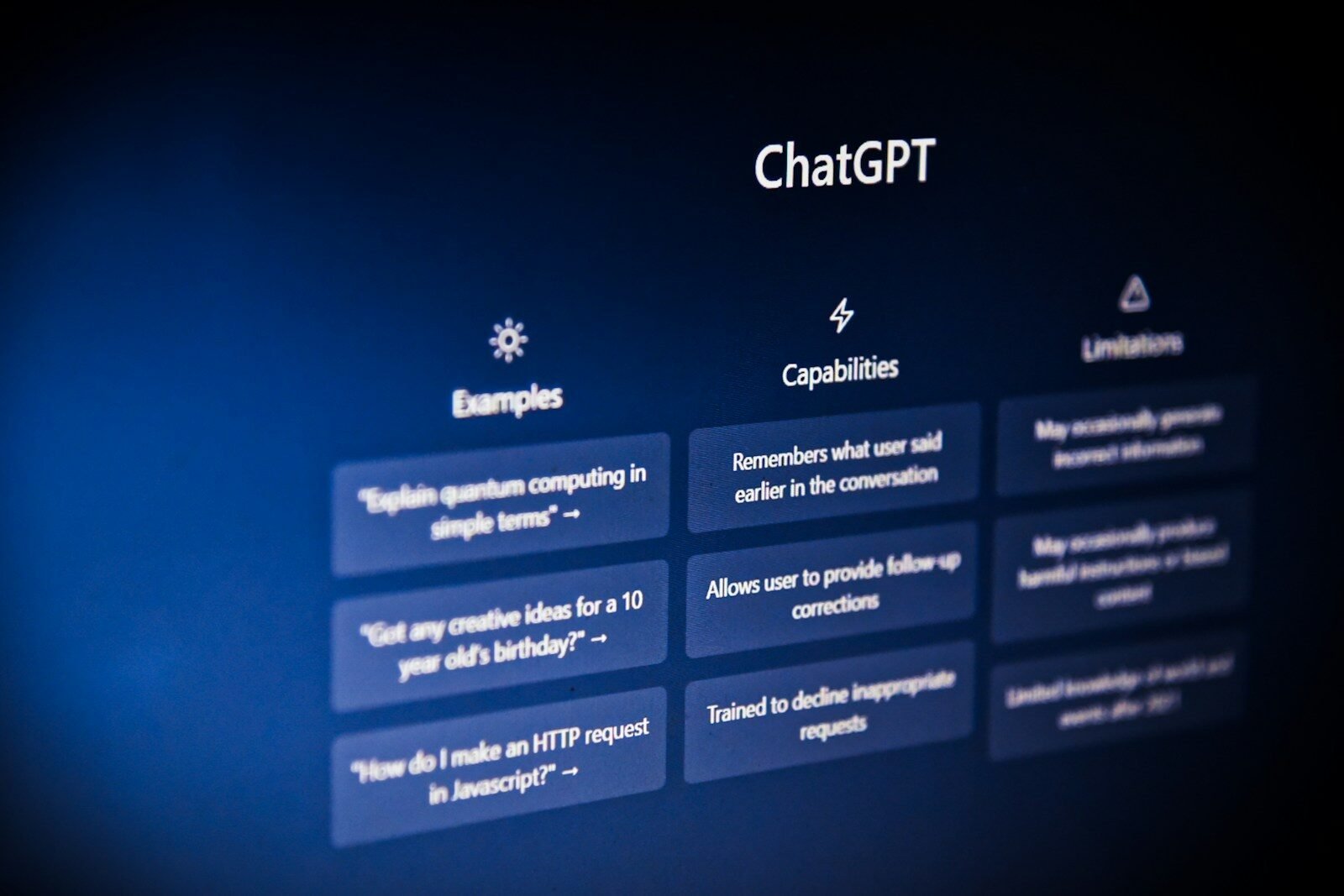
ChatGPT for Digital Marketing
ChatGPT can be a useful assistant for many digital marketing activities when it is used correctly.
A marketer can use ChatGPT for brainstorming, research assistance, content planning, copywriting support, social media ideas, email drafts, SEO outlines, FAQs, and content repurposing.
For example, a marketer could provide a primary keyword and audience description and ask ChatGPT to create a blog structure.
It can also help transform one piece of content into different formats.
A blog article could become:
- A LinkedIn post
- Instagram caption ideas
- Short video scripts
- Email content
- FAQ questions
- Social media hooks
However, marketers should not assume that everything generated by an AI system is automatically accurate.
Important information should be verified, especially statistics, facts, claims, names, dates, and industry-specific information.
The best use of ChatGPT for digital marketing is as a productivity and thinking assistant rather than as a complete replacement for professional judgment.
AI in Digital Advertising
Advertising is another area where artificial intelligence can support marketers.
Digital advertising platforms already use automated systems to process large amounts of data and help optimize campaigns.
AI can assist with:
- Audience analysis
- Ad personalization
- Creative variations
- Campaign optimization
- Performance analysis
- Predictive insights
- Automated bidding processes
For example, a business running online advertisements may create several versions of an advertisement. AI-powered systems can help identify which variations appear to perform better based on available campaign data.
AI can also help marketers analyze customer behavior and develop more relevant advertising messages.
However, businesses should continue monitoring advertising performance rather than relying blindly on automated recommendations.
Examples of AI in Digital Marketing
AI is already being used in many practical areas of digital marketing.
Example 1: AI Chatbots
A business can use an AI-powered chatbot to answer common customer questions, provide basic information, and guide visitors to relevant pages.
Example 2: Personalized Product Recommendations
An e-commerce website can use customer behavior and purchase information to recommend relevant products.
Example 3: AI Content Assistance
A content marketer can use AI to generate topic ideas, create outlines, summarize research, and develop first drafts.
Example 4: SEO Assistance
AI can help organize keyword research, identify related topics, and suggest content optimization opportunities.
Example 5: Email Personalization
Businesses can use customer information to create more relevant email campaigns for different audience segments.
Example 6: Advertising Optimization
AI-powered advertising systems can process campaign data and help marketers optimize targeting, bidding, and creative variations.
These examples show that AI is not limited to one part of marketing. It can support multiple activities across the digital marketing process.
Benefits of Digital Marketing with AI
Using AI can provide several benefits when implemented thoughtfully.
Saves Time
AI can help automate repetitive activities and speed up tasks such as brainstorming, summarization, content planning, and data analysis.
Supports Better Personalization
AI can help businesses understand customer behavior and create more relevant communication.
Helps Analyze Large Amounts of Data
Marketing campaigns can generate large datasets. AI can assist marketers in finding patterns and insights within that information.
Improves Productivity
Instead of spending hours on repetitive tasks, marketers can use AI assistance and focus more on strategy and creative work.
Supports Content Production
AI can help marketers create content ideas and drafts faster, making it easier to maintain a consistent publishing schedule.
Helps with Decision-Making
AI-generated insights can support marketing decisions when they are combined with reliable data and human judgment.
Challenges and Limitations of AI in Digital Marketing
Although AI provides many opportunities, it also has limitations.
AI Can Make Mistakes
AI-generated information can sometimes be incorrect or incomplete. Important information should therefore be verified before publication.
Generic Content
If businesses use AI without adding their own experience or perspective, the resulting content can feel repetitive or generic.
Privacy Concerns
Businesses should handle customer data responsibly and follow applicable privacy requirements when using AI tools.
Overdependence on AI
AI should support marketing strategy, not replace it. A business still needs clear goals, audience understanding, creativity, and human decision-making.
Brand Voice
AI-generated content may not automatically match a company’s tone and personality. Human editing is important to maintain consistency.
These limitations demonstrate why the strongest approach is often a combination of artificial intelligence and human expertise.
AI Digital Marketing vs Traditional Digital Marketing
AI-assisted marketing and traditional digital marketing are not completely separate approaches. In many cases, AI simply adds additional capabilities to existing marketing processes.
Traditional digital marketing may involve more manual research, analysis, content creation, and campaign management.
AI-supported marketing can automate or assist with some of these activities.
For example:
Traditional approach: A marketer manually reviews campaign data.
AI-supported approach: An AI tool helps summarize campaign data and identify possible patterns.
Traditional approach: A marketer manually creates multiple content ideas.
AI-supported approach: AI generates initial ideas that the marketer evaluates and improves.
The best strategy is not necessarily to choose one approach over the other. Instead, businesses can combine human expertise with AI assistance.
How Businesses Can Use AI in Modern Digital Marketing
AI can be useful for businesses at different stages of growth.
Small businesses can use AI for content ideas, social media planning, email marketing, customer communication, and basic data analysis.
E-commerce businesses can use AI for product recommendations, customer segmentation, personalization, and advertising assistance.
Service-based businesses can use AI to support lead generation, website chatbots, email follow-ups, content marketing, and SEO workflows.
Marketing agencies can use AI to assist with research, reporting, campaign analysis, content production, and workflow automation.
The right approach depends on the business’s goals, audience, budget, available data, and marketing strategy.
What Is an AI Digital Marketing Agency?
An AI digital marketing agency combines traditional digital marketing strategy with AI-powered tools and technologies.
An agency may use AI to support services such as:
- Search engine optimization
- Content marketing
- Social media marketing
- Paid advertising
- Email marketing
- Customer analytics
- Marketing automation
- Conversion optimization
However, simply using AI tools does not automatically make an agency successful.
A professional agency still needs experienced marketers who understand business objectives, customer behavior, branding, SEO, advertising strategy, and performance measurement.
AI should improve the workflow rather than become the entire strategy.
Best Practices for Using AI in Digital Marketing
Businesses can get better results from AI by following a few practical principles.
Start With a Clear Goal
Before using an AI tool, define what you want to achieve. For example, your goal might be generating leads, improving SEO, increasing engagement, or saving content production time.
Choose the Right Tool
Different AI tools are designed for different tasks. Choose tools according to your actual marketing requirements.
Give AI Proper Context
The quality of AI output often depends on the information and instructions provided. Include your audience, brand voice, objectives, keywords, and other relevant context.
Add Human Expertise
Review and improve AI-generated work. Add personal experience, original examples, expert opinions, and brand-specific information.
Fact-Check Information
Never assume that AI-generated information is automatically accurate. Verify important claims before publishing or using them in campaigns.
Protect Customer Information
Avoid unnecessarily sharing sensitive or confidential customer information with AI systems.
Measure Results
The success of AI should be measured through real marketing outcomes such as traffic, leads, conversions, engagement, customer satisfaction, or return on advertising spend.
Future of AI Digital Marketing
AI will continue to influence the way businesses approach digital marketing.
Future marketing workflows may involve more advanced personalization, automation, predictive analytics, conversational experiences, and AI-assisted content creation.
SEO and content marketing may also continue to evolve as search behavior and AI-powered search experiences change.
However, human skills will remain important.
Creativity, critical thinking, storytelling, strategic planning, communication, customer understanding, and industry expertise cannot simply be replaced by a tool.
The marketers who learn how to combine AI capabilities with human skills may be better positioned to adapt to changes in the digital marketing industry.
FAQs About AI Digital Marketing
What is AI digital marketing?
AI digital marketing is the use of artificial intelligence technologies and tools to support digital marketing activities such as SEO, content creation, advertising, personalization, analytics, and automation.
How is AI used in digital marketing?
AI can be used for keyword research, content assistance, customer personalization, marketing automation, data analysis, chatbots, advertising optimization, and other marketing activities.
How can ChatGPT help with digital marketing?
ChatGPT can assist with content ideas, blog outlines, social media content, email drafts, SEO planning, FAQs, copywriting, and content repurposing. Human review is important before publishing.
What are some examples of AI in digital marketing?
Examples include AI chatbots, personalized product recommendations, AI-assisted content creation, automated advertising optimization, email personalization, and marketing data analysis.
Can AI replace digital marketers?
AI can automate and assist with many marketing tasks, but it does not completely replace human strategy, creativity, judgment, experience, and customer understanding.
How can small businesses use AI for marketing?
Small businesses can use AI for content planning, social media ideas, SEO assistance, email marketing, customer support, lead follow-ups, and basic marketing analysis.
What is an AI digital marketing agency?
An AI digital marketing agency uses artificial intelligence tools along with digital marketing strategy to support services such as SEO, content marketing, advertising, social media, analytics, and automation.
Conclusion
AI is changing the way businesses approach modern digital marketing. From content creation and SEO to advertising, personalization, automation, and analytics, artificial intelligence can help marketers work more efficiently and make better use of available data.
However, successful AI digital marketing is not about allowing AI to do everything. It is about using the right technology for the right task while keeping human expertise at the center of the strategy.
Businesses that combine AI tools with creativity, accurate information, customer understanding, and strong marketing fundamentals can build more efficient and useful digital marketing workflows.
The future of digital marketing is not simply AI replacing humans. It is more accurately about humans using AI to work smarter.